❤️ Memories
Why does wine taste better on holiday?
That rosé was perfect on the terrace and disappointing back home: what is really going on when a wine seems better on holiday.
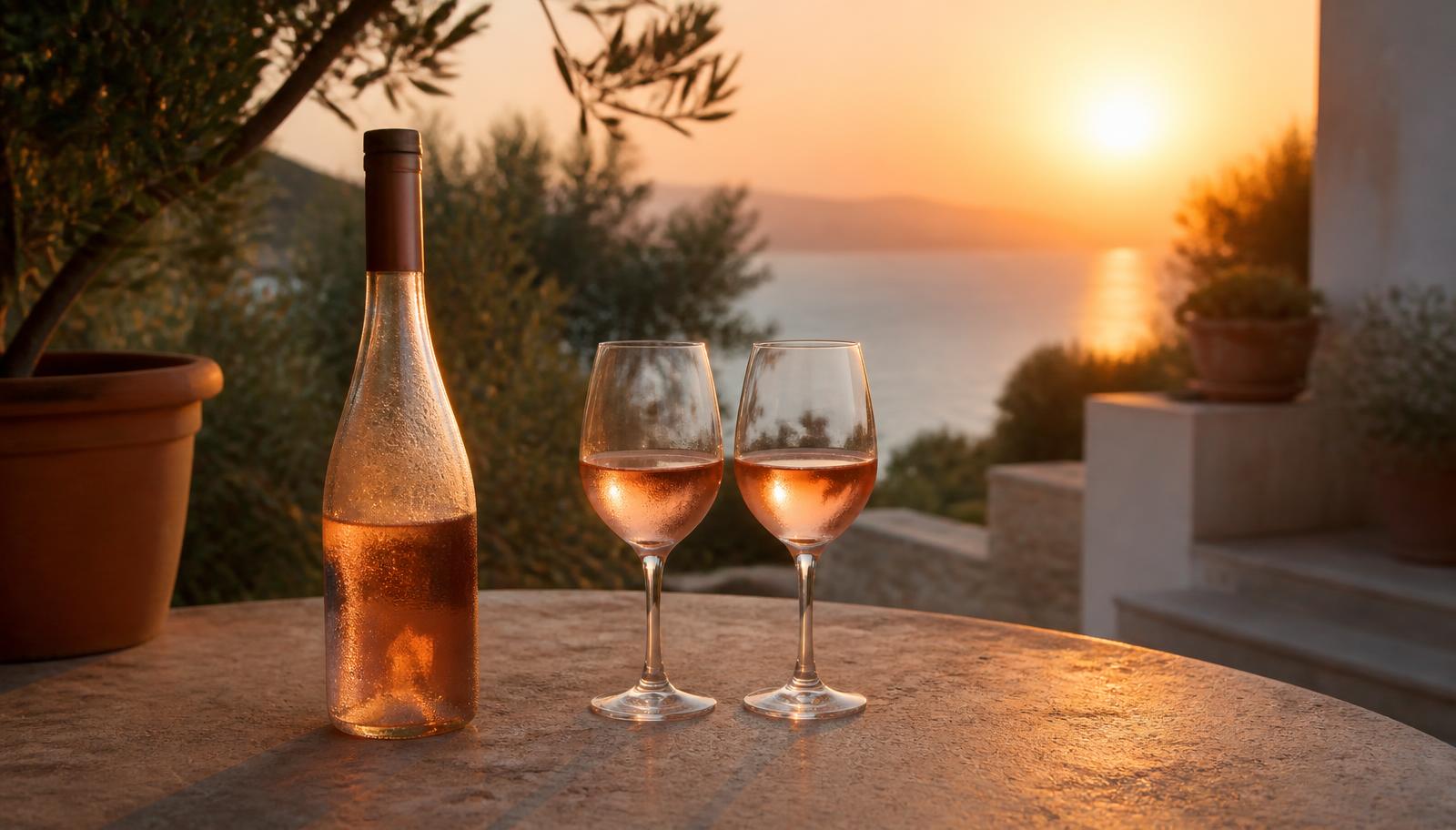
You are on a terrace, end of the day, the light is dropping. Someone pours you a local rosé in a slightly too thick glass, and it is the best rosé of your life. You note the name on your phone and buy two bottles before heading home.
Three weeks later, on a Tuesday evening, you open one at home. It's fine. Just fine. You check the label, it is the same wine. So what happened?
Nothing unusual. You have simply discovered that the bottle was only part of the experience.
The wine didn't change, the context did
Tasting is not a purely chemical event. What you perceive in a glass is rebuilt by the brain from taste and smell, but also from air temperature, noise, light, tiredness and mood.
On holiday, all those settings are different. You are rested, the day wasn't a chain of meetings, nothing is waiting for you in the next hour. The body is available. That same wine, drunk at nine in the evening after a heavy day, arrives in an already saturated system.
There are very concrete factors too: outdoors, warm air and a light breeze carry aromas differently. A chilled white at twenty eight degrees is far more refreshing than the same white in a living room at nineteen.
The people around the table matter enormously
Think back to your best bottles. Chances are you remember the people first.
A glass shared with friends you see twice a year doesn't taste like a glass drunk alone in front of a screen. The laughter, the conversation, nobody checking the time: all of that creates a relaxed attention, which is exactly what lets you appreciate what you are drinking.
Conversely, a great wine opened during a tense moment often goes unnoticed. The bottle didn't fail.
The place gets into the glass
A wine drunk where it is made has an advantage that is hard to match. The landscape is the vineyard you saw that morning. The dish beside it is the one the wine grew up with: the ripe market tomato, the grilled fish, the local cheese. That pairing isn't theory, it was born there.
Brought home, the same bottle loses all of it. It is drunk with something else, in a closed room, often too warm or too cold. It has lost its setting.
That's also why a holiday wine deserves similar conditions when you reopen it: outdoors if possible, with the food that goes with it, and not in the middle of a busy week.
The moment, and memory joining in
Something else happens too. A strong moment marks memory, and that memory permanently colours what you drank that day. The wine becomes the anchor of the memory. Six months later, thinking back to the bottle, it isn't the tannic structure that returns: it's the table, the light, the voices.
That mechanism is precious, but it works both ways. It flatters what was already good, and it also distorts. An average bottle drunk in a perfect moment keeps a reputation it doesn't quite deserve, and that's fine.
The real problem comes later: the memory stays, the name of the wine disappears. A blurry label photo, a half remembered name, and the bottle is lost. That's exactly the mechanism described in Why we forget the wines we loved.
Does that mean you were wrong?
No, and this is the important part. The rosé on the terrace really was an excellent wine moment. Tuesday's disappointment doesn't cancel it.
What you learn is more useful: some wines are made for a specific context. A light, saline rosé shines in full sun and seems thin in winter. A dense, tannic red feels heavy in August and becomes perfect in November alongside a slow cooked dish.
Knowing that avoids two mistakes: believing you understand nothing, and buying twelve bottles of a wine that only makes sense three months a year. To dig into your real preferences, How to choose a wine you'll actually like goes in that direction, and How to rate a wine simply helps you keep an honest record.
Keep the moment, not just the label
It often isn't only the bottle we love. It's the memory that comes with it.
veeni lets you keep those moments: a photo of the label, but also a photo of the scene, the place, the people there, a few words about the mood, and your rating. Months later, finding that wine again doesn't just return a name: it returns the terrace, the light and the people who were there.
And if the bottle you reopen at home pleases you less, you can write that down too. That kind of detail is what makes a cellar genuinely personal.
In short
Wine seems better on holiday because everything around it is better: the place, the people, the light, the absence of obligations. That isn't an illusion to correct, it's information worth keeping. Note the wine, but note the moment too: it's usually the moment you are trying to find again.
FAQ
Is wine really better on holiday?+
The wine is identical. What changes are the tasting conditions: rest, warmth, light, local food, company, no obligations. All of them genuinely affect perception.
Why does the bottle you bring home so often disappoint?+
Because it is drunk in another context, often alone or midweek, with different food and at a different temperature. Transport and a few weeks of rest play a smaller part too.
How can I recreate the feeling of the moment?+
Get close to the original conditions: serve it well chilled if that's how you had it, outdoors if possible, with a similar dish, and in good company.
Should I avoid buying wine on holiday?+
No, but buy one or two bottles rather than a case, and note the context in which you loved it. That note will tell you when to reopen it.
How do I keep the memory of a tasting?+
Note the place, the people and a few words about the mood at the time, with a photo. That's what lets you find both the wine and the moment months later.
Guides liés
🍷 Wine basics
How to choose a wine that matches your taste
Stop looking for the best wine and start understanding what you actually enjoy. A simple, jargon free way to choose with confidence.
4 min
🍷 Wine basics
How to find a wine you loved (and never lose it again)
A simple habit, done in the moment, so you never lose track of a bottle you enjoyed.
3 min
📝 Tasting journal
Keep a tasting journal (without becoming a sommelier)
A simple method to jot down your wines in a few lines, without spending your evenings on it.
3 min