🍷 Wine basics
How to find a wine you loved (and never lose it again)
A simple habit, done in the moment, so you never lose track of a bottle you enjoyed.
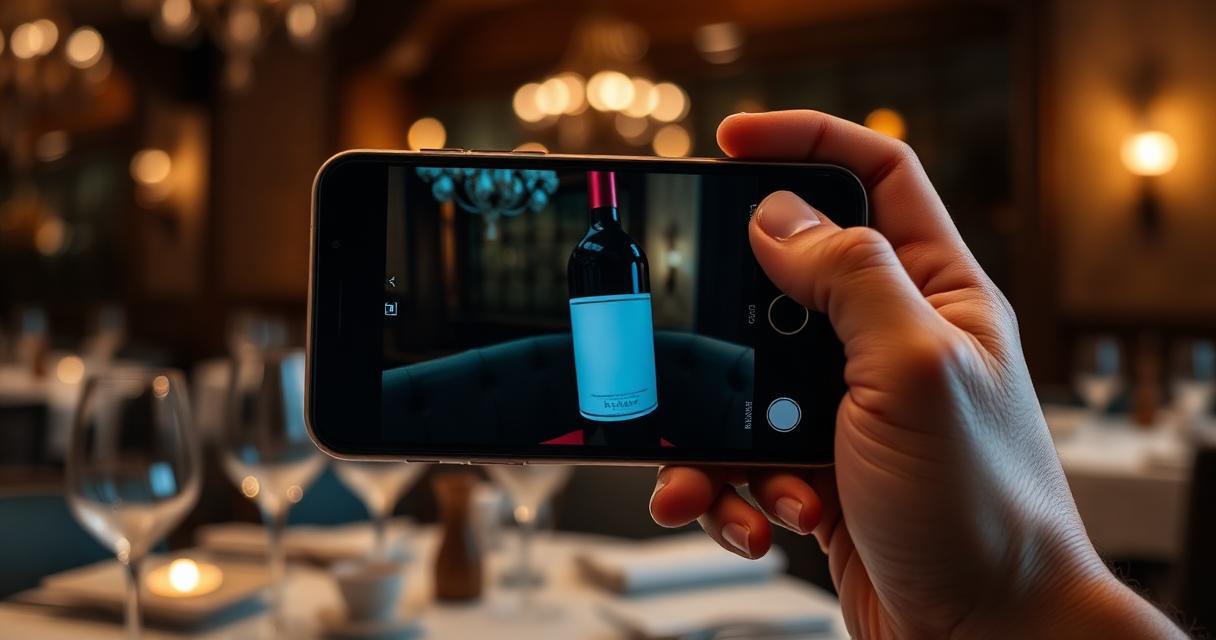
You're at a restaurant. The server pours a wine you don't know, you love it, and you tell yourself you'll remember to buy it again. Three months later, standing in front of a shelf at the wine shop, the name is gone. So is the region, the vintage, and the grape.
Almost every wine drinker knows this feeling. The good news is that a single, very simple habit takes care of it forever.
Why a wine slips away
We remember the moment easily. We remember the label much less. That's normal: a domain name, a grape, a vintage are pieces of information with no story attached, so the brain doesn't hold on to them.
The good news is that you don't need a great memory. You just need one small, repeatable gesture, done at the right moment.
Step 1 : Photograph the label when the bottle opens
The reflex most people skip: take out your phone the moment the bottle hits the table. Not after the second sip, not at the end of dinner.
At that point the bottle is still full, clean, well-lit, and nobody has started drinking. A few minutes later, the lighting drops, the conversation takes over, and the bottle ends up in the kitchen.
Four photos are enough:
- The main label, straight on, at eye level
- The back label, readable (use the flash if needed)
- The capsule, where the domain name is sometimes printed
- The context: the table, the friends, the glass
Step 2 : Write a few words, the same evening
You don't need a detailed tasting note. Three questions are enough to make a bottle findable and useful later on:
- Would I buy it again? (yes, no, maybe)
- What did I drink it with? (the dish, the occasion)
- What stood out? (a word, a sensation, a comparison that means something to you)
Three lines written that evening are worth more than an analysis written three weeks later, when the taste memory has already faded.
Step 3 : Keep everything in one place
This is probably the most important point. The photo is in your camera roll, the note is in a notes app, the wine shop's name is in an iMessage thread. Six months later, none of it reconnects.
Pick one place for your wines. Always the same. It can be a notebook, a dedicated file, or an app built for it. veeni is designed exactly for this gesture: scan the label, add a picture of the moment, write a few lines, and find everything again later by search, grape, region or memory.
When you've already forgotten
If the wine is already gone, a few leads still work:
- The restaurant: most archive their old wine lists. A polite email with the date of the meal often does the trick.
- The wine shop: with an approximate name (region, grape, "there was a horse on the label"), a good merchant will find it.
- Your friends: someone at the table may have taken the photo you didn't.
To sum up
Finding a wine you loved doesn't require an exceptional memory or a database. It requires a small gesture, always the same, at the right moment. Three seconds for the photo, three lines for the note, one place to bring it all together. The rest builds itself, bottle after bottle.
FAQ
Do I have to note every bottle?+
No. Note the ones you'd like to be able to find again. An everyday bottle can go without a note. A bottle you enjoyed deserves thirty seconds of attention in the moment.
What about restaurant wines, when I don't pick the bottle?+
Those are often the ones people regret not noting. You can ask to see the bottle, photograph it, and ask the sommelier to repeat the name. It's usually well received.
Should I keep empty bottles?+
Not really. A clear photo of the label is enough, and far easier to organise than a wall of empties.
Guides liés
🍷 Wine basics
How to choose a wine that matches your taste
Stop looking for the best wine and start understanding what you actually enjoy. A simple, jargon free way to choose with confidence.
4 min
🍷 Wine basics
Why a wine's price doesn't tell the whole story
An expensive wine isn't necessarily a wine you'll enjoy. What price actually measures, and what it doesn't measure at all.
4 min
🍷 Wine basics
What wine goes with sushi?
Whites, rosés, reds: what really works with sushi, what to avoid, and why.
4 min