📝 Tasting journal
Keep a tasting journal (without becoming a sommelier)
A simple method to jot down your wines in a few lines, without spending your evenings on it.
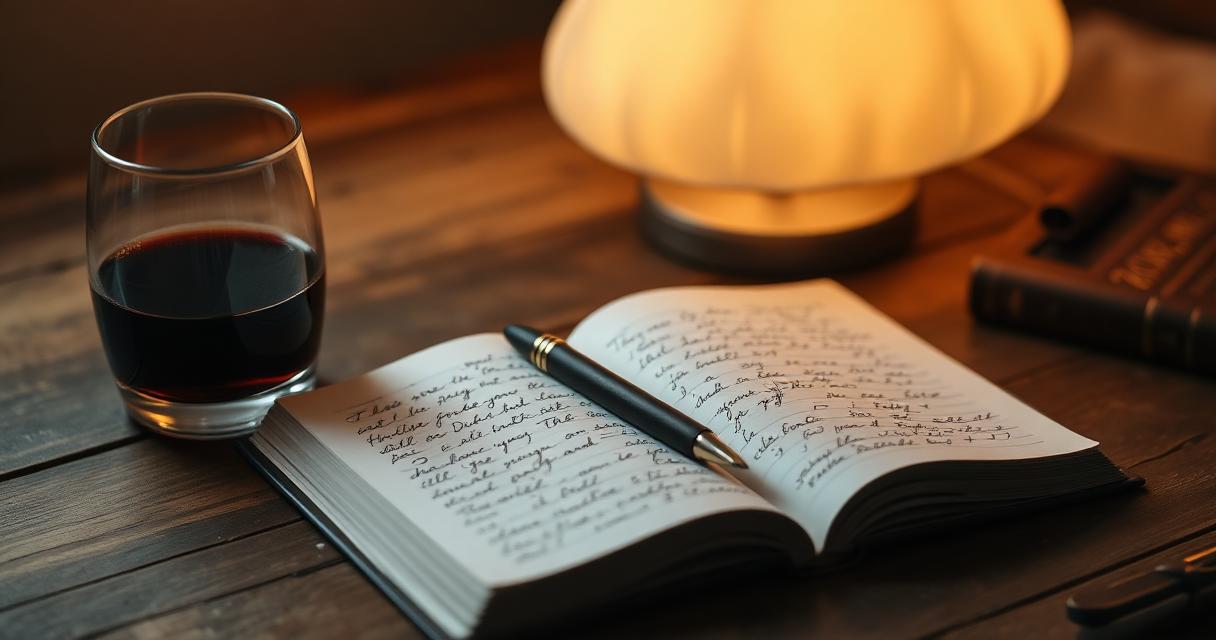
You open a bottle on a quiet Sunday night, you really enjoy it, and you tell yourself you'll write something down later. Later usually means never. Three months on, all that's left is a vague impression and the sense that a useful reference point has slipped away.
Keeping a tasting journal isn't oenology. It's keeping a simple trace of what you drink, so you can choose better next time.
Why writing changes everything
Without a note, every bottle becomes a stranger again a few weeks later. With even a short note, three things happen naturally:
- You buy better, because you recognise your taste instead of guessing every time.
- You share more easily, because you can actually recommend a bottle.
- You keep the memory, because finding a wine again is also finding a moment again.
The 3-3-3 method
A simple framework, in three blocks of three questions. It takes two or three minutes.
3 sensations
- The nose: what hits you first? (fruit, flower, spice, earth, other)
- The palate: soft, sharp, full, light, drying?
- The finish: short or long, pleasant or not?
You don't need a sommelier's vocabulary. Your own words are enough.
3 contexts
- With what? (the dish, or nothing)
- With whom?
- Where?
This is what turns a note into a memory later on.
3 verdicts
- Love / don't love / depends
- Would buy again: yes / no
- A score out of 5, on instinct
That's it. Three minutes, no more.
The mistakes that make people quit
Trying to do it perfectly. You last four bottles, then drop out. One line on a hundred wines is better than ten lines on ten wines.
Putting it off. "I'll write it tomorrow" almost always means "I wrote nothing". Taste memory fades in a few hours.
Writing like a guidebook. Guidebook notes are written for other readers. Yours are only for you. They can be short, funny, strange, that's fine.
Paper notebook, or an app?
A paper notebook is lovely, but hard to use beyond twenty or so wines. Finding "that Burgundy pinot noir from two years ago" in handwritten pages quickly becomes discouraging.
An app brings three things paper can't: a photo of the label and the moment, real search over time, and a cellar that builds itself as you taste. That's exactly what veeni does, with no forms to fill in: three sensations, three contexts, three verdicts, and you're done.
To sum up
A tasting journal isn't a school exercise. It's a quick gesture, done in the moment, that turns every bottle into a landmark. Three minutes per wine, around thirty wines to start knowing yourself. The rest is pure pleasure.
FAQ
I have zero vocabulary. How do I describe a wine?+
Compare. "Tastes like crushed cherry juice." "Reminds me of cut hay." "Sandpapery like over-brewed tea." The best notes are the ones that speak to you.
Should I note wines I didn't like?+
Especially those. A wine you didn't like, but managed to describe, is a wine you won't buy again by mistake.
How many wines until I start to know myself?+
About thirty, usually. From there, clear patterns appear: regions, grapes, styles. That's when you start choosing instead of guessing.
Guides liés
🍷 Wine basics
How to find a wine you loved (and never lose it again)
A simple habit, done in the moment, so you never lose track of a bottle you enjoyed.
3 min
❤️ Memories
Why does wine taste better on holiday?
That rosé was perfect on the terrace and disappointing back home: what is really going on when a wine seems better on holiday.
5 min
🍷 Wine basics
How to choose a wine that matches your taste
Stop looking for the best wine and start understanding what you actually enjoy. A simple, jargon free way to choose with confidence.
4 min