🍷 Wine basics
How to choose a wine that matches your taste
Stop looking for the best wine and start understanding what you actually enjoy. A simple, jargon free way to choose with confidence.
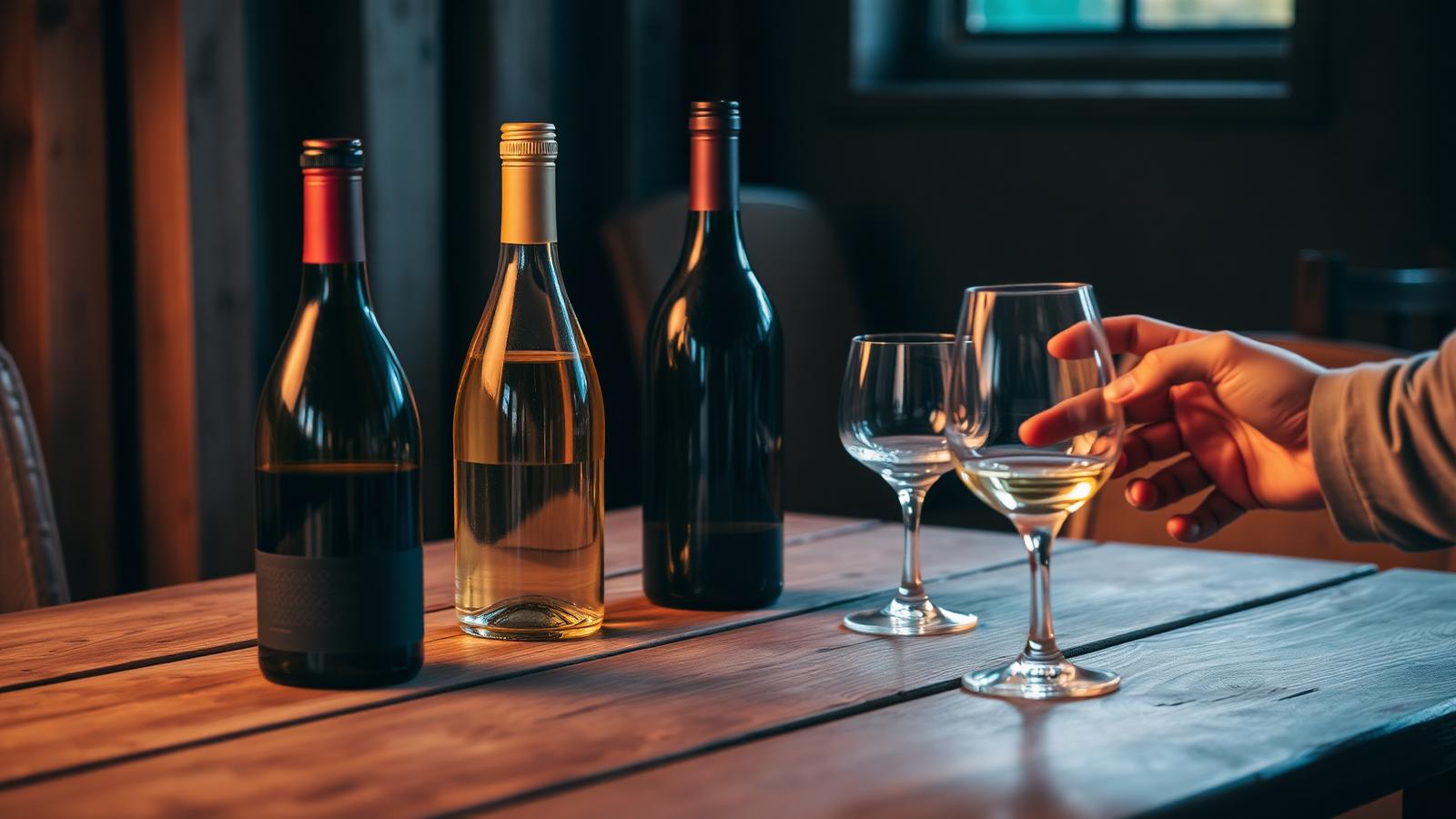
You're standing in front of fifty bottles, or reading a six page wine list. You have no idea what to pick, so you look at the prices, or you choose the label that feels safest. And half the time, the wine leaves you cold.
It isn't a knowledge problem. It's that nobody ever teaches us to identify what we like, while we spend a lot of energy trying to remember what is supposed to be good.
There is no best wine
That's the first idea to let go of. Two people can drink the same bottle and walk away with opposite opinions, and neither of them is wrong.
Taste depends on how sensitive you are to acidity, how well you tolerate tannins, how used to oak you are, the level of sweetness you're accustomed to, the time of day, the food on the table. A very concentrated wine can feel magnificent to one person and tiring to another after two glasses.
In other words, the useful question isn't "is this wine good?" but "is this wine right for me?".
Five markers are enough to start
You don't need technical vocabulary. Five markers cover most situations, and you can judge them on any wine, even with no experience.
- Fruit: does the wine feel fruity and generous, or rather restrained and mineral?
- Acidity: does it make your mouth water, is it sharp and lively? Or soft, round, soothing?
- Tannin (mostly reds): does it dry your mouth, does it grip your gums? Or is it smooth and velvety?
- Oak: do you smell vanilla, toast, coffee, coconut? Or nothing of the kind?
- Body: does the wine leave a rich, broad, slightly creamy impression? Or a light and clean one?
After three or four bottles judged this way, a pattern shows up. Many people discover, for instance, that they like low tannin reds full of fruit, or crisp whites with no oak. Those are two very precise styles, and it's enough to choose in any shop.
How to test without wasting bottles
The most effective method is also the cheapest: compare two opposite wines in the same sitting.
Take two whites at a similar price, one from a cool northern region, one from a warm southern one. Taste them minutes apart. You'll have no trouble telling which one you prefer, and more importantly why. Contrast teaches far more than ten bottles drunk separately.
Do the same with a light red and a powerful one, then with an oaked white and an unoaked white. Three evenings are enough to draw a fairly accurate map of your preferences.
A good wine merchant is a real ally here. Just tell them what you liked last time, in plain words: "I enjoyed a light, fruity red with no bitterness". That's far more useful to them than a domain name.
Why your taste beats scores
A score out of one hundred is an average. It gathers the opinions of people who don't drink like you, often in professional tasting conditions, without food, with dozens of samples in a row.
It's still interesting information about the technical quality of a wine. But it says almost nothing about the pleasure you'll get from it. A highly rated wine can be too powerful, too young or too oaky for you.
Knowing that you like reds from Beaujolais, whites from the Loire and dry rosés from Provence, on the other hand, is directly actionable. It works at a restaurant, in a supermarket, on holiday, and it doesn't go out of date.
Keeping track of what you enjoy
The one hard part is memory. Preferences build up bottle after bottle, but they're useless if the bottles are forgotten.
That's exactly what veeni is for: scan the label of a wine you enjoyed, write one line about what you liked, then find every wine of that style again later. After a few months, your own history becomes your best buying guide, more reliable than any ranking, because it only talks about you.
To sum up
Choosing wine gets simple as soon as you stop hunting for the best and start noticing what pleases you. Five markers, a few comparisons, and the habit of keeping a trace of what you liked. The rest builds itself, glass after glass.
FAQ
Do I need to know grape varieties to choose a wine?+
Not necessarily, but it's a handy shortcut. Once you notice you like gamay, pinot noir or chenin, you have a compass that works anywhere in the world.
Will my taste change?+
Almost certainly. Many people start with soft, fruity wines and gradually enjoy more acidic, more tannic or drier ones. It isn't progress, just evolution, and there's nothing to force.
Does an expensive wine match my taste better?+
Not really. Price reflects yields, scarcity, reputation and labour, not your sensitivity. A twelve euro bottle can please you more than a hundred euro one.
How do I choose at a restaurant when the list is long?+
Tell the server what you enjoyed recently and give a budget. Two sentences are enough. It works better than reading the whole list, and nobody minds.
Guides liés
🍷 Wine basics
Why a wine's price doesn't tell the whole story
An expensive wine isn't necessarily a wine you'll enjoy. What price actually measures, and what it doesn't measure at all.
4 min
🍷 Wine basics
How to find a wine you loved (and never lose it again)
A simple habit, done in the moment, so you never lose track of a bottle you enjoyed.
3 min
🍷 Wine basics
What wine goes with sushi?
Whites, rosés, reds: what really works with sushi, what to avoid, and why.
4 min