🏠 Wine cellar
What temperature should you store wine at?
The right storage temperature by wine type, natural cellar versus wine fridge, and the common mistakes that quietly ruin good bottles.
A friend brings back a bottle from holiday, one he has been talking about for three months. He puts it in the cupboard above the oven, because that's where there was room. Six months later we open it: the wine is tired, slightly cooked, none of the fruit we expected. The bottle wasn't bad. It just spent the winter at twenty eight degrees.
That is how good bottles are usually lost. Not through bad luck, but through a few degrees too many and a lot of variation.
Storage temperature is not serving temperature
Clearing this up first solves half the problem. Storage temperature is the one the bottle sleeps at for months or years. Serving temperature is the one in the glass, at the moment you drink.
For storage, one rule covers every wine: between 10 and 14 degrees, with as little variation as possible. A red, a white, a rosé and a champagne can all rest happily side by side at twelve degrees. You adjust afterwards, before serving.
Serving temperatures, type by type
This is where the differences really appear.
- Light, fruity reds (gamay, supple pinot noir, cinsault): 13 to 15 °C. Twenty minutes in the fridge changes everything.
- Structured reds for keeping (bordeaux, syrah, nebbiolo): 16 to 18 °C. Never more: above that, alcohol takes over and the aromas flatten.
- Crisp dry whites: 10 to 12 °C. Too cold and you hear nothing from the wine.
- Rich, oaked whites: 12 to 14 °C, to let the texture show.
- Rosés: 8 to 10 °C.
- Champagne and sparkling: 8 to 10 °C, in an ice water bucket rather than the freezer.
The most widespread mistake is red served at room temperature, which in summer means twenty two or twenty three degrees. Twenty minutes in the fridge puts it right.
Natural cellar or wine fridge?
Both work, they just answer different needs.
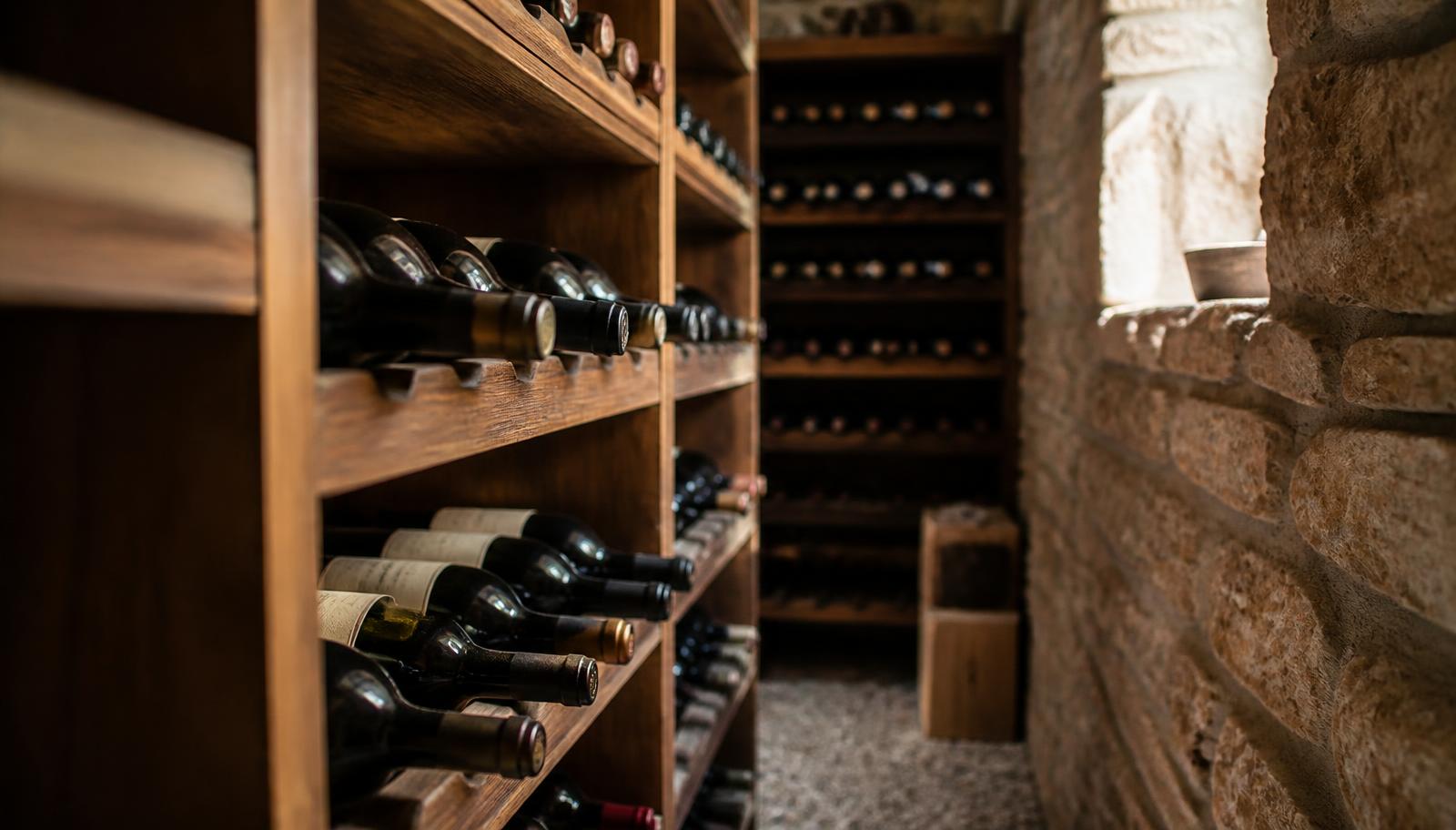
A natural cellar (basement, underground room) is ideal when you have one: stable temperature, darkness, decent humidity, no vibration, no running cost. The downside is that you don't get to choose it. Some get too warm in summer, others are too dry and let corks dry out.
A wine fridge gives you control. An ageing cabinet holds a single temperature, around twelve degrees, and suits long keeping. A multi zone service cabinet keeps whites ready on one side and reds on the other: very practical day to day, less suited to long ageing.
Three things matter more than the brand: temperature stability, humidity around 70 %, and quiet, meaning no vibration.
If you are setting up, Wine cellar 101 covers the basics step by step.
The common mistakes
They are almost always the same, and they are expensive.
- The garage. Five degrees in January, thirty in August: the swing tires the wine even more than the heat.
- The kitchen. Oven heat, steam, changes all day long. It is the worst room in the house.
- Above a radiator or against a heated wall. The wine cooks slowly, unnoticed.
- Direct light. Sun and fluorescent light damage wine, especially in clear bottles. A rosé left behind a window is gone in weeks.
- Vibration. Next to a washing machine or a noisy fridge, an ageing wine develops badly.
- The fridge for months. Too cold, too dry, too much vibration: fine for two days, bad for two years.
- Standing bottles long term. With a cork closure, lay the bottle down so the cork stays moist.
Keeping and ageing: not every bottle is a candidate
We tend to assume wine always improves with time. In practice, the vast majority of bottles sold today are made to be drunk within two or three years. Waiting ten years doesn't make them better, only tired.
Wines for keeping have recognisable markers: good acidity, present tannins, dense material, often longer ageing before release. Those are the ones that gain complexity as fruit turns into more evolved notes.
Stored well, a bottle delivers what it promised. You still have to remember you own it, when you bought it and when you meant to open it. That is usually where it gets complicated, as How to find a wine again explains.
Storing well, and finding it again
Good storage is pointless if the bottle stays forgotten in a box. veeni already lets you follow your cellar: the bottles you own, the ones you have tasted, your ratings and your notes. Future features will make wines for keeping easier to manage, so you know more simply what to open, and when.
In short
Storing wine comes down to three things: a stable temperature between 10 and 14 degrees, darkness, and no vibration. Garages, kitchens, radiators and direct light do more damage than any flaw in the bottle. And for storage to mean anything, you need to find what you put aside.
FAQ
What is the ideal temperature for storing wine?+
Between 10 and 14 degrees, ideally around 12, with as little variation as possible. That range suits reds, whites, rosés and sparkling wines alike.
Can you store wine in a kitchen?+
For a few days or weeks, yes. Over several months, no: oven heat and temperature swings damage wine faster than people expect.
Do you need a wine fridge?+
Not necessarily. A cool, dark, stable cupboard in an unheated room is plenty for wines you will drink within two years. A wine fridge becomes useful when you keep bottles for several years.
Does wine cope with cold?+
Better than with heat, but not indefinitely. Below five degrees development stops and the cork can contract, letting air in.
How long can you keep a bottle?+
It depends entirely on the wine. Most bottles are best within two or three years. Wines built for keeping, more structured and more acidic, can develop over ten years and sometimes far longer.