🍷 Wine basics
What wine goes with sushi?
Whites, rosés, reds: what really works with sushi, what to avoid, and why.
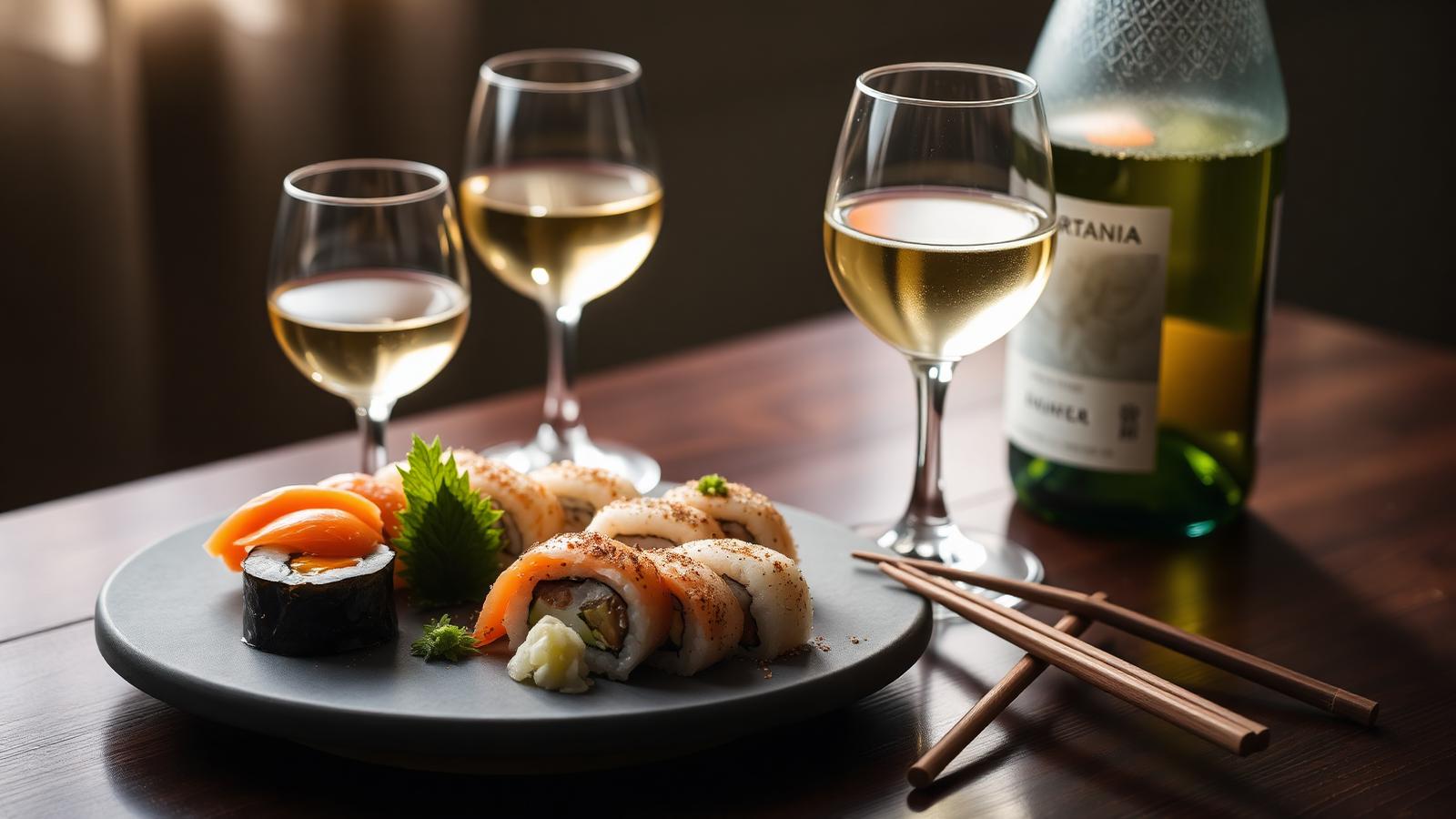
A sushi platter on the coffee table, two or three friends, and the question that always comes up: what do we open? The usual answer is a random white, or giving up and reaching for a beer.
Yet the pairing isn't complicated at all. You just need to understand what's actually happening on the plate.
Why the pairing feels tricky
A sushi platter isn't one dish. It's a run of very different flavours, often within the same meal.
- The raw fish is delicate, briny, sometimes fatty like salmon or tuna.
- The vinegared rice brings gentle acidity and a hint of sugar.
- The soy sauce adds salt and a lot of umami.
- The wasabi and ginger bring heat and freshness.
Salt and umami harden tannins and push alcohol forward. Heat amplifies the burn. That's why a structured red or a high alcohol wine so often falls flat next to sushi.
Whites, the safe bet
This is where the best pairings live, by a wide margin. Three families work particularly well.
Dry, crisp whites. Chablis, muscadet sur lie, dry riesling from Alsace or Germany, albariño from Galicia. The acidity cleans the palate between bites, the saline edge answers the brininess of the fish. It's the simplest and most reliable choice.
Dry aromatic whites. Loire sauvignon, Austrian grüner veltliner, Spanish verdejo. Their citrus and green notes sit well with ginger and wasabi, without burying the fish.
Bubbles. Extra brut champagne, crémant, cava, franciacorta. The bubbles and acidity do the same job as a crisp white, adding a lightness that suits the rice beautifully. For a full sushi meal, it's probably the most comfortable pairing of all.
A riesling with a touch of residual sugar can also work very well, especially if the platter includes sweeter rolls or spicy sauces.
Rosés, a wider option than people think
A dry, tense rosé from Provence, the Languedoc or the Loire works very well, especially with salmon sushi, california rolls and anything with avocado or spicy mayo.
One condition: it has to be dry and fresh, served properly chilled. A round, sweet or high alcohol rosé loses the point, it weighs the meal down instead of lifting it.
Reds, if you choose carefully
Red isn't forbidden, it's just more demanding. The rule is to go down in tannin and in power.
What works: a light pinot noir from Burgundy or Germany, a Beaujolais gamay served cool, a trousseau from the Jura, a lightly extracted cinsault. With bluefin tuna, a barely oaked pinot noir can even be a lovely pairing, because the texture of the fish handles a little substance.
What doesn't work: tannic Bordeaux cabernets, powerful northern Rhône syrahs, Argentinian malbecs, cabernets raised in new oak. Salt and umami turn their tannins bitter and metallic, and the raw fish ends up almost unpleasant.
One tip that holds for every light red in this kind of meal: serve the bottle around fourteen degrees, out of the fridge twenty minutes before. A red served too warm feels heavy immediately.
Common mistakes
- Heavily oaked chardonnay. Vanilla and toast flatten raw fish completely.
- High alcohol wine. Above fourteen degrees, wasabi and alcohol add up and burn the palate.
- Wine served too warm. Probably the most common mistake, and the easiest to fix.
- One wine for a very varied platter. On a large platter, two complementary bottles, a crisp white and a dry rosé, are often nicer than a single one.
- Drowning the sushi in soy sauce. The more the sauce dominates, the harder the pairing gets for any wine.
Keeping your pairings
The best pairing isn't the one you read about, it's the one you actually enjoyed. A muscadet with a platter on a Friday night, a cool pinot noir with tuna, a crémant everyone agreed on: those specific experiences are the useful ones.
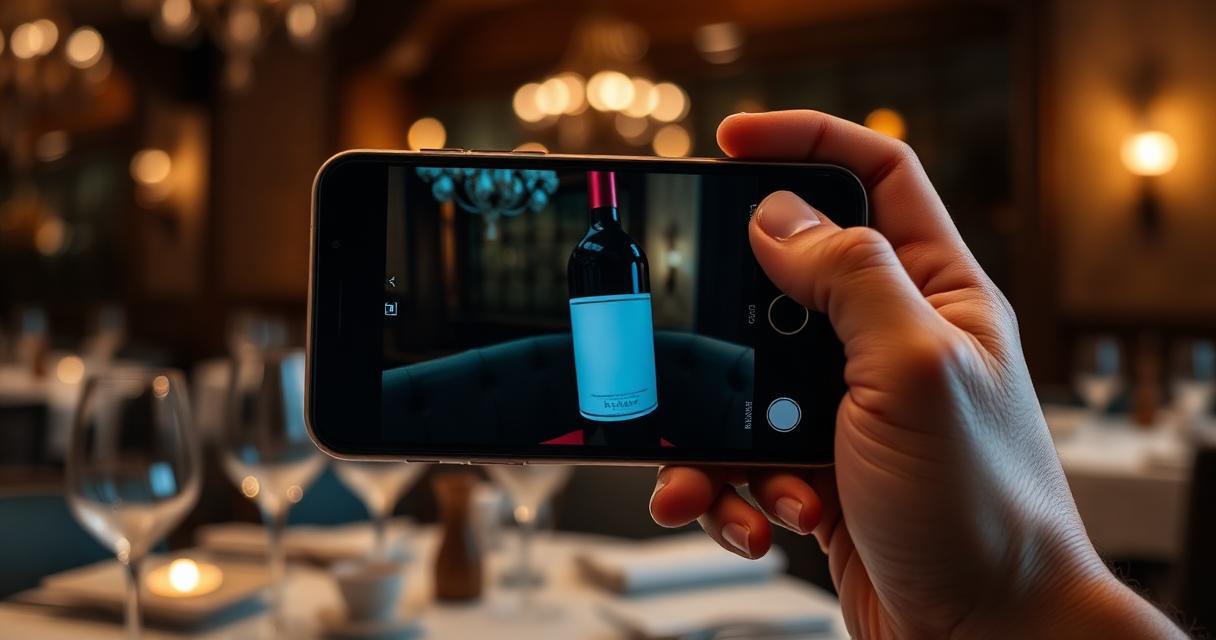
The trouble is they fade within weeks. With veeni, you scan the bottle, note the dish in one line, and find the pairing again next time sushi lands on the table. Over time you build your own pairing list, the one that actually matches your taste.
To sum up
With sushi, freshness almost always wins. A dry crisp white or bubbles are the safest choice, a dry rosé widens the field, and a very light red served cool can be a pleasant surprise. The rest is trial and error, and above all not forgetting the ones that worked.
FAQ
Is sake still the best match?+
It's a very coherent pairing, and often excellent. But it's in no way mandatory, and a crisp white or an extra brut champagne holds up perfectly well.
What wine goes with spicy sushi or spicy sauces?+
A white with a little residual sugar, such as an off dry riesling, or a well chilled dry rosé. Sugar calms the heat, acidity keeps the appetite going.
And with sashimi, without rice?+
Go even further towards finesse: chablis, muscadet, blanc de blancs champagne. Without the vinegared rice, the fish is barer and handles less substance.
Do vegetarian rolls need a different wine?+
Not really. A dry aromatic white such as sauvignon or grüner veltliner works well with cucumber, avocado and ginger.
Guides liés
🍷 Wine basics
Why a wine's price doesn't tell the whole story
An expensive wine isn't necessarily a wine you'll enjoy. What price actually measures, and what it doesn't measure at all.
4 min
🍷 Wine basics
How to choose a wine that matches your taste
Stop looking for the best wine and start understanding what you actually enjoy. A simple, jargon free way to choose with confidence.
4 min
🍷 Wine basics
How to find a wine you loved (and never lose it again)
A simple habit, done in the moment, so you never lose track of a bottle you enjoyed.
3 min